According to Nicole Janok, the editors have agreed to print a correction (look for it on the inside lower left hand corner of the front page of tomorrow's (6/24) edition of the paper.) I pointed out that, contrary to the article, the "alternates" are actually full voting members when it comes to items before the Historic Preservation Board - essentially the Planning and Zoning Board is 7 members with 2 alternates and the Historic Preservation Board is a 9 member board.
The second item concerned the following paragraph which appeared on page 7c:
" The appointments leave the board without a member with a strong historical preservation background."
I pointed out my background and I guess they agreed that I might have a strong background in historical preservation.
Things that make you go "Hmmmmmmm".
[update from 6/24 - They took care of the voting issue, however I guess they don't consider my background in historic preservation a strong one. You can be the judge of that]
Friday, June 23, 2006
New PZHRPB Appointments
Last week, the City Commission met and made its annual reappointments to the PZHRPB, and to other City Boards. Quick background: The seven regular members of the PZHRPB have staggered 3 year terms. The two "alternate" members (full members of the Historic Resources Preservation Board) only vote on items relating to projects that are not in historic districts when a regular member of the 7 member P&Z Board are absent. Are you confused now? I hope I made that clear enough.
First of all, Jon MacGillis chose not to re-apply this year and his term will end at the end of July. We will miss his background in landscape architecture and experience in administering a large zoning department in the form of the Palm Beach County Zoning Division. Jon has been a stable and reliable presence on the board for many years. Unfortunately, our meetings were always on the eve of either his Zoning Commission or Board of County Commission meeting so I am sure the need to focus on his "paying job" played a role in his decision. Good luck to Jon and I hope to see him still involved in matters pertaining to Lake Worth in the future.
Unfortunately, the City Commission chose not to re-appoint Herman Robinson and Helen Green to the Board. In doing so, we lose the active involvement of people that live in two of the City's historic districts and who live near the downtown commercial center of Lake Worth. We also will miss the sensitivity that both of them gave in considering Certificates of Appropriateness and the proper role of redevelopment in the future of the City. I will miss chiding Herman in getting his point across and translating "Hermanese" to English - he is a great guy that made a tremendous contribution to the Board. And with Helen, we will miss her encyclopedic knowledge of the history of Lake Worth and her kind manner displayed in her support for the work of City staff and concerns of the neighborhoods.
We will have a reception before our July 19th meeting, starting at 5 p.m., in the City Hall Conference Room. Please plan on joining us in recognizing the contribution of our departing Board members and welcoming the new members.
As for the new appointments: We have been crying for an architect to serve on the Board for years and now we have one in Ed Le Blanc. Ed will be a full voting member of the Board and we look forward to his input, especially as it relates to design and harmonious, compatible development within the City. Anne Hoctor will be the first alternate - Anne has a private planning practice and well help fill the void left by Jon MacGillis leaving the Board.
Regarding the last appointment, Vincent DeVito, I am not sure what the City Commission was thinking. This is a gentleman that instead of moving a house to make way for his development project, tore it down "by mistake". We ended up fining him for this violation. I sincerely hope that he brings more than just a pure developer perspective to the Board. Time will tell. As said before, and contrary to the article in PB Post, he will be able to vote on COAs regardless of anyone being absent.
I understand that the last choice was between Mr. DeVito and Trip Cioci - I would have been preferred Trip's appointment in that it would be an appointment from the under-represented western portion of the City and he has proven to be an intelligent contributor in the political process. Do I necessarily agree with his point of view? Probably not, but that voice needs to be represented during our deliberations.
First of all, Jon MacGillis chose not to re-apply this year and his term will end at the end of July. We will miss his background in landscape architecture and experience in administering a large zoning department in the form of the Palm Beach County Zoning Division. Jon has been a stable and reliable presence on the board for many years. Unfortunately, our meetings were always on the eve of either his Zoning Commission or Board of County Commission meeting so I am sure the need to focus on his "paying job" played a role in his decision. Good luck to Jon and I hope to see him still involved in matters pertaining to Lake Worth in the future.
Unfortunately, the City Commission chose not to re-appoint Herman Robinson and Helen Green to the Board. In doing so, we lose the active involvement of people that live in two of the City's historic districts and who live near the downtown commercial center of Lake Worth. We also will miss the sensitivity that both of them gave in considering Certificates of Appropriateness and the proper role of redevelopment in the future of the City. I will miss chiding Herman in getting his point across and translating "Hermanese" to English - he is a great guy that made a tremendous contribution to the Board. And with Helen, we will miss her encyclopedic knowledge of the history of Lake Worth and her kind manner displayed in her support for the work of City staff and concerns of the neighborhoods.
We will have a reception before our July 19th meeting, starting at 5 p.m., in the City Hall Conference Room. Please plan on joining us in recognizing the contribution of our departing Board members and welcoming the new members.
As for the new appointments: We have been crying for an architect to serve on the Board for years and now we have one in Ed Le Blanc. Ed will be a full voting member of the Board and we look forward to his input, especially as it relates to design and harmonious, compatible development within the City. Anne Hoctor will be the first alternate - Anne has a private planning practice and well help fill the void left by Jon MacGillis leaving the Board.
Regarding the last appointment, Vincent DeVito, I am not sure what the City Commission was thinking. This is a gentleman that instead of moving a house to make way for his development project, tore it down "by mistake". We ended up fining him for this violation. I sincerely hope that he brings more than just a pure developer perspective to the Board. Time will tell. As said before, and contrary to the article in PB Post, he will be able to vote on COAs regardless of anyone being absent.
I understand that the last choice was between Mr. DeVito and Trip Cioci - I would have been preferred Trip's appointment in that it would be an appointment from the under-represented western portion of the City and he has proven to be an intelligent contributor in the political process. Do I necessarily agree with his point of view? Probably not, but that voice needs to be represented during our deliberations.

Thursday, June 22, 2006
Highlights of PZHRPB Meeting of 6/21
Well, sometimes it's hard to predict what will happen at any given meeting. Last night was one of those. The bulk of our conversation and deliberation was regarding a project proposed for the southwest corner of Palmway and Lake Avenue. This is a currently vacant piece of property. A couple of years ago, we approved a three story mixed use building (office on 1st floor) with 12 residential units above - with parking contained within the building. The property was subsequently sold and the new owner submitted an application about a year ago for essentially the same plan, but with an additional 6 units.
Over that period of time, the City has had three urban designers/architects reviewing the plans. They were, chronologically Frank Yang, Bill Feldkamp and Darrin Engel, our current urban designer. As the project went through the review process, each of the three had different suggestions as to the architectural treatment of the building.
The project finally made its way to our agenda of June 7th. At that time, Darrin had given a list of architecturally related items that he would like addressed and we reviewed each at the meeting. There were also some minor variances related to the rear, or southern part, of the property, which we went ahead and approved. We were about to approve the site plan and community appearance portion of the project, but some members (particularly John Paxman, Jon MacGillis and Lisa Maxwell) wanted Darrin to meet with the applicant in between that meeting and our meeting last night to work out the details.
So, we get our packets at the end of last week and Darrin indicated that they had addressed issues and he was o.k. with it. The revise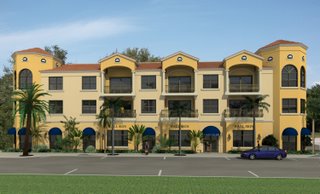 d plans showed what I thought to be a better building, especially in terms of proportions related to window openings and arch details.
Well, to make a long story short, most of the Board was not happy with the building, still. The major suggestion that came from those that were aesthetically challenged by the proposal was "take an eraser to the whole thing". Comments like "suburban architecture", "Best Western" and "not befitting our main street" all came out. I challenged everyone to try to be specific regarding what they don't like about it, including the public in attendance, and we received some detail (too massive, problems with windows/trim or lack thereof, relation to the street, etc.)
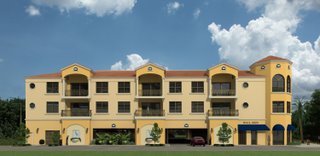
Now, I made the comment that if you added up the architectural hours spent on this project, including the applicant's architect and the three City architects that reviewed the plan over a time period of a year, we could all have a "nice vacation in Fiji". And, I had a hard time understanding how we could have had such scrutiny over that period in terms of architectural review and the most common comment at last night's meeting was "take an eraser to the whole thing - it's beyond tweaking."
At that point, I declared the system officially broken if this is the result. (See other posts re staffing)
Phil Spinelli made a motion, which failed 4-3 (Helen Green, Phil Spinelli and I supporting the motion) to approve the project with conditions. John Paxman then made a motion to bring back a revised plan for our second meeting in August (the 19th). This was not enthusiastically accepted by the applicant and they left without knowing what direction to go. Not sure what they will do to respond, but I have since encouraged them to look at the original approval and see what they can add, if anything.
And, of course, the PB Post reporter was there through the debate on this, so we can expect an article, I am sure.
Let me know what you think about the renderings. A "cool" feature is that you can click on the pictures and get a larger view. Try it and see!
Also important to note is that this project was presented before the CRA at its May 23rd meeting. This link will take you to the staff report. The project was very well received by the CRA. http://lwcra.net/minutes/060523lagovalere.pdf
I'll share some of the things I discussed under board member comments later.
Over that period of time, the City has had three urban designers/architects reviewing the plans. They were, chronologically Frank Yang, Bill Feldkamp and Darrin Engel, our current urban designer. As the project went through the review process, each of the three had different suggestions as to the architectural treatment of the building.

The project finally made its way to our agenda of June 7th. At that time, Darrin had given a list of architecturally related items that he would like addressed and we reviewed each at the meeting. There were also some minor variances related to the rear, or southern part, of the property, which we went ahead and approved. We were about to approve the site plan and community appearance portion of the project, but some members (particularly John Paxman, Jon MacGillis and Lisa Maxwell) wanted Darrin to meet with the applicant in between that meeting and our meeting last night to work out the details.
So, we get our packets at the end of last week and Darrin indicated that they had addressed issues and he was o.k. with it. The revise
 d plans showed what I thought to be a better building, especially in terms of proportions related to window openings and arch details.
Well, to make a long story short, most of the Board was not happy with the building, still. The major suggestion that came from those that were aesthetically challenged by the proposal was "take an eraser to the whole thing". Comments like "suburban architecture", "Best Western" and "not befitting our main street" all came out. I challenged everyone to try to be specific regarding what they don't like about it, including the public in attendance, and we received some detail (too massive, problems with windows/trim or lack thereof, relation to the street, etc.)

Now, I made the comment that if you added up the architectural hours spent on this project, including the applicant's architect and the three City architects that reviewed the plan over a time period of a year, we could all have a "nice vacation in Fiji". And, I had a hard time understanding how we could have had such scrutiny over that period in terms of architectural review and the most common comment at last night's meeting was "take an eraser to the whole thing - it's beyond tweaking."
At that point, I declared the system officially broken if this is the result. (See other posts re staffing)
Phil Spinelli made a motion, which failed 4-3 (Helen Green, Phil Spinelli and I supporting the motion) to approve the project with conditions. John Paxman then made a motion to bring back a revised plan for our second meeting in August (the 19th). This was not enthusiastically accepted by the applicant and they left without knowing what direction to go. Not sure what they will do to respond, but I have since encouraged them to look at the original approval and see what they can add, if anything.
And, of course, the PB Post reporter was there through the debate on this, so we can expect an article, I am sure.
Let me know what you think about the renderings. A "cool" feature is that you can click on the pictures and get a larger view. Try it and see!
Also important to note is that this project was presented before the CRA at its May 23rd meeting. This link will take you to the staff report. The project was very well received by the CRA. http://lwcra.net/minutes/060523lagovalere.pdf
I'll share some of the things I discussed under board member comments later.
Tuesday, June 20, 2006
Notes from the 2006 Congress of New Urbanism
(Note: This was sent in an e-mail to all four City Commissioners, the Mayor, Paul Boyer and Sharon Jackson on 6/20/06)
There was a national New Urbanism conference in Rhode Island within the past month. Some of my planning colleagues attended and one prepared the following notes from the conference. These are short hand notes and more information on New Urbanism can be found by searching the Internet. Essentially, the NU movement promotes compact, resource and pedestrian friendly development - consistent with long standing urban - not suburban, development patterns. In many ways, Lake Worth is what everyone who is doing new "urban" greenfield development wants to be - a real "feather in our cap" and one that we can use to promote responsible redevelopment within the City.
I have highlighted sections of these notes that I thought were particularly insightful or applied in some way to the City of Lake Worth. I give credit to Andrew Frey, an attorney with Gunster Yoakley, who is the author of these notes. He provided a disclaimer in his transmitting e-mail that these didn't necessarily reflect his personal views - so it probably is a fairly accurate, albeit condensed, version of what he experienced at the conference. I have also provided this on my blog wesblackman.blogspot.com. I am also not necessarily a proponent of all of these views, but I find them interesting and many of them we as a City are already doing. They are definitely worthy of discussion in light of the development of the Master Plan.
Enjoy.
Wes Blackman
There was a national New Urbanism conference in Rhode Island within the past month. Some of my planning colleagues attended and one prepared the following notes from the conference. These are short hand notes and more information on New Urbanism can be found by searching the Internet. Essentially, the NU movement promotes compact, resource and pedestrian friendly development - consistent with long standing urban - not suburban, development patterns. In many ways, Lake Worth is what everyone who is doing new "urban" greenfield development wants to be - a real "feather in our cap" and one that we can use to promote responsible redevelopment within the City.
I have highlighted sections of these notes that I thought were particularly insightful or applied in some way to the City of Lake Worth. I give credit to Andrew Frey, an attorney with Gunster Yoakley, who is the author of these notes. He provided a disclaimer in his transmitting e-mail that these didn't necessarily reflect his personal views - so it probably is a fairly accurate, albeit condensed, version of what he experienced at the conference. I have also provided this on my blog wesblackman.blogspot.com. I am also not necessarily a proponent of all of these views, but I find them interesting and many of them we as a City are already doing. They are definitely worthy of discussion in light of the development of the Master Plan.
Enjoy.
Wes Blackman
Congress for the New Urbanism XIV
Providence, Rhode Island
Day 1 – Opening Remarks, Andres Duany
FAQ About New Urbanism (NU)
1. What is NU? It is about the environment and human habitats. Environmental regulation is everywhere, but environmentalists still play the victim, and in fact lose to developers all the time, because most human habitats are unpleasant and people want to move out of them, spread out. There are few places where people enjoy living together in a compact development pattern. Basically, "the environmental problem" in America is due to the American middle class lifestyle. But it clearly cannot be solved by environmental regulation; limits to development must be primarily market-driven.
NU is complex and pragmatic, not categorical or ideological. It is about what works in the long run. The present is actually an impediment to good planning. NU is good design plus time.
2. Could you sum up NU on a bumper sticker? Compact, walkable, diverse.
3. What drives NU? First, it was a backlash against the suburban pattern of development, and its proponents were developers. Then environmentalists got behind NU, advocating smart growth policies. For example, Manhattan is the most environmental city in the US because it preserves wilderness and attracts tourists who would otherwise disturb the bears in Yellowstone. Now NU is driven by the price of energy. Energy may not continue to skyrocket in price, but it will never be cheap again, as described in the most important book of our time, The Long Emergency.
Note: Democracy doesn't avoid mistakes, it just correct them in the long run. Dictatorship keeps making the same mistakes again and again.
Why are developers drawn to NU? Market forces. A developer delivers a house plus amenities. An amenity may natural, such as location or view, or man-made, such as a clubhouse, golf course, or guardhouse. The developer pays for the amenity, either in the cost of land or construction, and then passes the cost to the home buyers. NU creates a fourth kind of amenity: urbanism, sense of place, the good design of things a developer would have to build anyway. This amenity is free, but the developer can charge a premium for it.
4. Don't people still drive in NU communities? Yes, good NU communities actually park more cars on average than traditional subdivisions. In fact, a community that minimizes or bans cars is not NU. NU promotes mobility choices.
5. Why don't NU communities have better town centers? Manhattan took time to get to where it is. Communities have to go through development cycles. For example, Seaside, the first NU community, will become a slum, and then will be rediscovered as a historic district.
6. How does retail work in NU communities? Most importantly, retail in NU communities is not exempt from national competition. Mom & Pop stores still have to learn the new rules, and NU communities should include both national and local retailers. Anyone who hates Starbucks is an ideologue, not a true NU.
Note: Some critics of NU say that NU communities are not "real places." This is a medieval way of thinking, i.e. that an abstract idea is somehow more real than bricks and mortar.
7. Why have home owners associations (HOAs) ? NU communities are not exempt from government; they are still governed by federal, state, and local law. In fact an HOA is an additional level of government, and local governments now get ideas and customer service standards from HOAs, in the American tradition of "laboratories of democracy."
8. Why do NU communities look so traditional? Seaside included Modern architecture from the start. The traditional look of NU communities is market-driven, democratic, not nostalgic. Modernists only raise this criticism because Modernism is not in demand and Modernists feel impotent. In Modernism, there are no rules, so it is impossible to do anything wrong. Traditional architecture can be done wrong, resulting in kitsch, so NU produce pattern books. NU does not care about style in general, but does recognize that if a style is chosen, it should be done correctly.
9. How is NU different from architecture? The fundamental difference is heterogeneity. NU puts in place a system so that different design professionals can act sequentially and the result will embody the principles of NU. First the planners plan, then the designers design the public spaces, then different architects design each building. This also allows for learning over time, an organic process. NU is about designing and managing a process, not designing individual buildings.
10. Where's the affordable housing? NU is affordable, but it doesn't stay that way. Prices go up in a kind of instantaneous gentrification. The only way to keep housing affordable is to do ugly HUD-style project housing. The best way to promote affordability is to include rental buildings and duplexes, and allow outbuildings in single-family districts.
11. Why are most NU communities greenfield developments? Actually, 50% of NU developments are infill. Regardless, greenfield developments will get built anyway, so they might as well be NU.
Day 1 – Seminar 1, Victor Dover
Challenges to NU Development
1. NIMBYism. The solution is communication and information, such as a charette, which creates a rapid feedback loop between the developer and the public. As a general rule, when passions are hot, add information, and when enthusiasm is low, add passion.
2. Bad zoning. The solution is form-based codes.
3. Bad architecture. The solution is better training. Architecture professors often criticize NU communities for the bad architecture of individual buildings. But those buildings were designed by their former students. The key to better training is looking to precedent, what works.
4. Bad streets. The solution is better street design standards. Are wider streets with larger turning radii and no trees really safer for pedestrians?
Day 1 – Seminar 2, Emily Talen
The History of NU
Over the course of the 20th Century, US urban population grew 40%, while suburban population grew 700%, and four schools of thought rose and fell in urban planning:
1. Social Reformers. Promote social services. Not concerned by urban form, i.e. not anti-urban.
2. Garden City. Advocate totally new settlement patterns that create a sense of place, early NU.
3. City Beautiful. Burnham and his ilk. Advocate planned cities or adding order to existing cities, particularly by introducing grand civic spaces under the theory that good planning benefits people and commerce. Not concerned with social problems.
4. Regionalists. Advocated location of cities and other human interventions based on highest and best use of geographic advantages and natural resources, e.g. the Tennessee Valley Authority. Very authoritarian.
While these four groups were fighting, Corbu came out of nowhere and swept the global imagination of planners. NU has emerged to revive and synthesize the original four schools, finding solutions in the fertile tension among the four.
Day 1, Seminar 3, Dhiru Thadani
The Transect
Notes: There are 5-7 spaces for every car in the US. Narrower streets are actually safer, e.g. 9' lanes instead of 12'. 99% of all pedestrian fatalities occur when the vehicle is traveling faster than 38 mpg.
Day 2, Seminar 1, panel
How Finance NU?
Bob Burch: bonds
Joel Cohen: TIF
Bob Chapman: developer
David Mayfield: developer
Kelli Stevens: marketing
How finance NU?
KS: Banks look to the same three factors regardless – character, credit, and collateral – but it is important to sell the bank on the NU vision.
RC: Banks don't care about NU, only care about equity, location, and pro formas.
BB: Bank will finance anything, regardless of concept, as long as you can show that it will sell.
DM: "New" is a bad word to banks`, but now there are comps.
Subsidies for infill?
JD: Tax credits: New Market, if 20% of rent is from commercial use; historic; green building; brownfield; low-income, i.e. up to 80% AMI
What about mixed-use?
DM: The secondary market will not accept loans for mixed use, so banks have to keep in house.
KS: Need friendly appraiser.
BB: Office use is scary for banks.
RC: If can, build uses in phases, e.g. retail later.
DM: 4-story brownstone is easy, three units over retail, avoid ADA.
What is your exit strategy?
DM: Keep it simple so you can get out quickly. The key is phasing for more flexibility.
How can bank help?
DM: Keep the same loan officer on the job for the whole project.
RC: Get a good appraiser who will recognize the income stream from the first sales and how that money can be used to finance later phases, i.e. self-finance.
Day 2, Seminar 2
Modern architecture in NU
Why should NU include Modern architecture?
1. There is some market demand for it.
2. Modern architecture can be urban
3. Modern architecture expresses optimism in future
4. Diversity of styles is more modern
Seaside: The design code only applies to homes, not public buildings, and the code is style-neutral. Public buildings maybe any style, and several are definitely Modern. One home owner was specifically encouraged to push Modern as far as possible within code, and the neighbors hated the result. Prospect has a design code, but many individual houses are modern. Aqua has no code, but all the units ended up looking the same.
Day 3, Seminar 1, panel
Doing well by doing good
David Pace: Baldwin
If your development doesn't have a view, you have to create a sense of place for value and profit. You should create such a premium for every lot, i.g. frequent parks and public waterfronts, not waterfront lots. However, you have to have the courage to charge for that premium on every lot.
You cannot tell what product category our buildings contain by looking at them. What looks like a $4M home could just as easily be a rental building containing $700/mo apartments. Baldwin has 350 product types all being sold at the same time, which is known as co-absorption. Lots are designed to fit any of the product types: 120' feet deep, alley-loaded parking.
Deal with lots of builders, so no one builder can buy lots and sit on them. Make sure contracts with builders have strict time limits and clear rights of redemption, i.e. you can take lots back from builder and sell to another builder to maintain velocity. Another cost saving: a good code up front allows builders, not the developer, to hire and pay for architects.
Denise Gammon: Stapleton
City and developer negotiated a document, called the Green Book, outlining both the design and the economics of the development. Sustainability should be market-driven, but you have to create a market for it by educating all the stakeholders. For example, the Green Book requires 1/3 open space. Individual lots in Stapleton are only 90' deep, but this is made up for by an abundance of parks. Customer surveys consistently show that the #1 amenity of Stapleton is walkability to the town centers.
The first phase of Stapletong included 1M square feet of retail, so the developer could use the revenue to issue $150M of revenue bonds to help finance the rest of the deal. Try to externalize the cost of infrastructure with bonds or TIF.
Keeping the product mix diverse and the number of builders high (18) promotes absorption. Stapleton neighborhoods are like "Chia Pets," just add water and they grow instantly. Contracts with builders only last for one year, and the developer only works with mid-sized builders who can't hold onto lots.
Notes: NU is best as infill, but for a small project, do not overspend on amenities. Do your homework on market demand. NU projects are 15-20% more expensive to build, but command 30% premiums and 50% faster absorption. Even in an NU development, 80% of land goes to single-family homes, but most profits come from multi-family. The myth is that only luxury home-buyers have enough money to pay a park premium, but that is untrue; all product types will pay a park premium. The best way to phase a project is to start with the area either 1) with most product types, 2) near existing neighborhoods, or 3) including town center retail for revenue bonds. The best way to ensure affordability is a land trust.
Saturday, June 10, 2006
City Staffing Crisis
So much to say and so little time. I hope to add some more entries this weekend. I'd like to talk about the past Commission meeting and the Sunset Drive land use and zoning change, the market study for Dixie Hwy. commissioned by the CRA and our last Planning and Zoning meeting. Stay tuned for those.
But the most urgent item and one that we, as a community, should bring up at the Commission's visioning session scheduled for June 17th at the Osborne Community Center is the lack of an appropriate number of City staff to carry out important and critical municipal functions. We all heard about the lifeguard "walk-out" a couple of weeks ago - and the City inexplicably left the beach open - but this spreads through out all the departments. This is a regional problem that relates to the inequity in the salary ranges offered by the City in relation to other municipalities and in relation to the cost of living in Palm Beach County and South Florida in general.
This topic came up at the last Planning, Zoning and Historic Resources Preservation Board meeting (6/7) as it applies to the Community Development Department staffing levels and current vacancies. Here is the irony: The City is spending close to $1 million on a new master plan for the City, which will include major revisions to the City's Comprehensive Plan (and the associated and required Evaluation and Appraisal Report due this year) and development of a coherent set of Land Development Regulations (Zoning Code) that will guide the City's development from here on out. Each of these documents will be reflective of the citizen input solicited through many public workshops and design sessions with the consultants over the past year.
Now, why are we in a position where we have to pay almost $1 million to an outside consultant to up-date and revise our planning and zoning foundation of the City? It is due to the fact that changes and up-dates to our Comprehensive Plan and Zoning Code have done in a reactive way without the proper staffing level over time to accomplish these updates over time. These should have been consistently been performed over the past twenty years or so, but have been relegated to the "back burner" since staff was always reacting to the latest crisis or the next development project. There have been no "comprehensive planners" working on the City staff ever - that is right, a City of almost 40,000 or more (depending on who is counting) has never had someone just doing up dates to the Comp Plan or to the Zoning Code.
O.K., so say next year we will have these documents in place. Each of these will be state-of-the-art land planning documents reflecting citizen opinion on the physical development of the City. So, who is going to be administering these documents. Right now, our Community Development Department staff includes one director, one urban designer, an intern, a vacant "planner" position and a vacant secretary position.
Just how dire is the situation now? Due to the lack of a secretary, our meetings have been recorded onto a CD as a record of each meeting. However, as of today, the last set of minutes available from the City's website is from October 19, 2005!! The heading "2006 Planning & Zoning Board Minutes" is empty! This is the main source of public information of what we do at each of our two-a-month, sometimes more, meetings and there is nothing available unless you wish to get a CD from the City Clerk's office, which is what some do I understand. This is just "unacceptable" given the high expectations that the citizens have for "open government" and the importance that we give to planning the future development of the City. I hope to, as time provides, help to fill in the blanks through this blog, but the ultimate responsibility for this should be through the daily activities of a properly funded City staff - not to be done by citizens on a volunteer basis. So the City is currently unable to do its job in communicating to the public the actions of one of the most important Boards in terms of actual impact to the citizenry. Argh!
And this is just one of the areas where the City cannot perform a basic function related to the regulation of development within the City. I maintain, and have said this publicly many times, that a City of our size and with the development interest we have, are and will continue to experience - we need at least two full time professional positions that handle "current" planning and zoning issues - applications that come through the door. We need two full time professional positions that handle "comprehensive" planning and zoning issues - up-dates to the Comprehensive Plan, changes to Future Land Use Plan designations and changes to the Land Development Regulations. I am convinced that if we had these positions, we would keep them busy all the time and, more importantly, not have to rely on consultants. And, we should also maintain our Urban designer position and our Director. Our Director currently is doing everything as it relates to processing development applications. If freed of these duties by a support staff, that person could be doing things that a Director should be doing - informing the City commission regarding current Planning and Zoning activities and Board actions and projects, attending regional planning meetings/County planning meetings, smoothing out problems with the development review process, responding to citizen's questions and inquiries, etc., etc.
We are no where close to that now. We have a system that is really set up to fail due to the inappropriate staffing levels and the inherent problem of things "falling through the cracks". This is not a reflection of the competency of our current staff - it is a reflection that the focus is only on getting out the reports for the next meeting and putting out fires.
This cannot continue of we are really going to emerge as the New and Improved Lake Worth we would all like to experience.
The preceding is just the situation within an area with which I am intimately familiar. Similar issues are found throughout the City departments - some which may have life safety (lifeguard issues, police, fire) implications.
We all need to come to grips with this and find a way to solve this crisis. Your comments on this are encouraged!
But the most urgent item and one that we, as a community, should bring up at the Commission's visioning session scheduled for June 17th at the Osborne Community Center is the lack of an appropriate number of City staff to carry out important and critical municipal functions. We all heard about the lifeguard "walk-out" a couple of weeks ago - and the City inexplicably left the beach open - but this spreads through out all the departments. This is a regional problem that relates to the inequity in the salary ranges offered by the City in relation to other municipalities and in relation to the cost of living in Palm Beach County and South Florida in general.
This topic came up at the last Planning, Zoning and Historic Resources Preservation Board meeting (6/7) as it applies to the Community Development Department staffing levels and current vacancies. Here is the irony: The City is spending close to $1 million on a new master plan for the City, which will include major revisions to the City's Comprehensive Plan (and the associated and required Evaluation and Appraisal Report due this year) and development of a coherent set of Land Development Regulations (Zoning Code) that will guide the City's development from here on out. Each of these documents will be reflective of the citizen input solicited through many public workshops and design sessions with the consultants over the past year.
Now, why are we in a position where we have to pay almost $1 million to an outside consultant to up-date and revise our planning and zoning foundation of the City? It is due to the fact that changes and up-dates to our Comprehensive Plan and Zoning Code have done in a reactive way without the proper staffing level over time to accomplish these updates over time. These should have been consistently been performed over the past twenty years or so, but have been relegated to the "back burner" since staff was always reacting to the latest crisis or the next development project. There have been no "comprehensive planners" working on the City staff ever - that is right, a City of almost 40,000 or more (depending on who is counting) has never had someone just doing up dates to the Comp Plan or to the Zoning Code.
O.K., so say next year we will have these documents in place. Each of these will be state-of-the-art land planning documents reflecting citizen opinion on the physical development of the City. So, who is going to be administering these documents. Right now, our Community Development Department staff includes one director, one urban designer, an intern, a vacant "planner" position and a vacant secretary position.
Just how dire is the situation now? Due to the lack of a secretary, our meetings have been recorded onto a CD as a record of each meeting. However, as of today, the last set of minutes available from the City's website is from October 19, 2005!! The heading "2006 Planning & Zoning Board Minutes" is empty! This is the main source of public information of what we do at each of our two-a-month, sometimes more, meetings and there is nothing available unless you wish to get a CD from the City Clerk's office, which is what some do I understand. This is just "unacceptable" given the high expectations that the citizens have for "open government" and the importance that we give to planning the future development of the City. I hope to, as time provides, help to fill in the blanks through this blog, but the ultimate responsibility for this should be through the daily activities of a properly funded City staff - not to be done by citizens on a volunteer basis. So the City is currently unable to do its job in communicating to the public the actions of one of the most important Boards in terms of actual impact to the citizenry. Argh!
And this is just one of the areas where the City cannot perform a basic function related to the regulation of development within the City. I maintain, and have said this publicly many times, that a City of our size and with the development interest we have, are and will continue to experience - we need at least two full time professional positions that handle "current" planning and zoning issues - applications that come through the door. We need two full time professional positions that handle "comprehensive" planning and zoning issues - up-dates to the Comprehensive Plan, changes to Future Land Use Plan designations and changes to the Land Development Regulations. I am convinced that if we had these positions, we would keep them busy all the time and, more importantly, not have to rely on consultants. And, we should also maintain our Urban designer position and our Director. Our Director currently is doing everything as it relates to processing development applications. If freed of these duties by a support staff, that person could be doing things that a Director should be doing - informing the City commission regarding current Planning and Zoning activities and Board actions and projects, attending regional planning meetings/County planning meetings, smoothing out problems with the development review process, responding to citizen's questions and inquiries, etc., etc.
We are no where close to that now. We have a system that is really set up to fail due to the inappropriate staffing levels and the inherent problem of things "falling through the cracks". This is not a reflection of the competency of our current staff - it is a reflection that the focus is only on getting out the reports for the next meeting and putting out fires.
This cannot continue of we are really going to emerge as the New and Improved Lake Worth we would all like to experience.
The preceding is just the situation within an area with which I am intimately familiar. Similar issues are found throughout the City departments - some which may have life safety (lifeguard issues, police, fire) implications.
We all need to come to grips with this and find a way to solve this crisis. Your comments on this are encouraged!
Wednesday, May 24, 2006
Special City Commission Meeting 5/24
What a day this was for me! It had been a busy week with work and Wednesday afternoon I chaired the Land Development Regulation Advisory Board (LDRAB) meeting. I really wanted to attend the special City Commission meeting that was called to discuss:
A. Discuss Legislative Duties and Accountability
B. Discuss amending the Commission's Rules and Procedures
Well, I got out of the LDRAB meeting, had to run a quick errand in the opposite direction and ended up in
This came under the topic of department heads not living within the City and how the policy/ordinance was not being adhered to. He referred to the Community Development Director and how another very viable candidate that lived in the City was passed over for someone who lived out of town. And then, so no one would have any doubt who he was talking about, he said that the person who was passed over was now Chairman of the Planning and Zoning Board. All that is true, but it is important to know some of the additional details – and why not here and now?
I submitted an application to the City soon after Ed Breese left the City (early retirement - don't get me started on that). Wendy Newmeyer, the City's former City Manager was just leaving too - at almost the same time. She had wanted to hire me right away after Ed Breese left, but I said that it would be important for me if I was going to "lead" that I really needed to be hired my the new City Manager. Paul Boyer came on as manager and one of the first work items for him were to fill the various department head positions and senior staff that had taken the early retirement plan.
I hadn't heard anything for a while and I started to inquire. Come to find out, they were about to re-advertise the Community Development Director's position due to a "lack of qualified candidates".
I'll let you ponder that one for a while.
Apparently, my application package had been lost between personnel and City Hall. I guess it was finally found. (One wonders sometimes, doesn’t one?).
So, I get a call for an interview and during the interview Mr. Boyer said that he was ready to offer the position to me. I paused and said, "You know...I just don't like the appearance of this. Here I am, Chairman of the Planning and Zoning Board - the only one that would have been interviewed and the only "qualified" candidate." I told him that he could make his own decision, but that if I was going to "lead", I would need to be on a firm foundation and that I would like to pulled for a pool of eligible and from other qualified candidates. And, most importantly, I want someone in that position that is the best for the City of
We all know how this story ends and I am not one bit sorry. My ten year stint was coming to an end with DJT and I was thinking about going into business for myself anyway. That has turned out to be one of the best decisions of my life! And, one of the considerations was that if I were to be paid City staff, then my political opportunities with the City were extinguished.
It really is funny how it ended up with Sharon Jackson interviewing and taking the position. Sharon and I worked together - in the same department and sometimes on the same stuff - when I was with the City of
Anyway, back to the commission meeting. I get in the building and everyone's faces looked drawn, sour and somber. It was during public comment on Commissioner Vespo's motion "to terminate the City Manager's contract without cause..."
Much of public comment revolved around the need for continuity and the feeling that no one really was at the helm. Much was also made of the news that Mr. Boyer has applied for an open City Manager position in the Town of  ome "direction" for the train to work. The question was asked, by more than one resident, that if the action happened, he didn’t see the City having a “Plan B” or really an idea of where we were all headed, especially with an administrative leadership vacuum.
Then Commissioner Lowe made a plea for accountability - to which Mr. Boyer asked how they (staff) could be accountable if they didn't know for what he and the staff, department heads, are to accountable. There was general agreement that the Commission needed to conduct a visioning exercise in the very near future. There is just such a communication/action gap between the City Commission and the City Manager. This apparently also involves phone calls going un-returned from the City Manager to some members of the Commission.
The next item of business concerned the order of items on the agenda – particularly focusing on the appropriate place for public presentation. Discussion, and the eventual motion, called for the re-ordering of the agenda so that public comment for non-agendaed items would come later in the agenda (as shown below).
- INVOCATION
- PLEDGE OF ALLEGIANCE
- AGENDA – ADDITIONS/DELETIONS/REORDERING
- PRESENTATIONS
- CONSENT AGENDA
- PUBLIC HEARINGS
- UNFINISHED BUSINESS
- NEW BUSINESS
- CITY ATTORNEY'S REPORT
- CITY MANAGER'S REPORT
- PUBLIC PARTICIPATION ON NON-AGENDAED ITEMS
- COMMISSION LIAISON REPORTS AND COMMENTS
- ADJOURNMENT
Affordable Housing Task Force Meeting 5/22
Really a good meeting - couldn't stay for the whole agenda - but the Task Force really made some progress. How they are drafting the ordinance is a little odd in that they are not reacting to a draft ordinance, but trying to combine the best aspects of other ordinances from other municipalities (Palm Beach County, Florida and the entire nation). What they are doing is making individual motions which indicate the general direction that they want to proceed. Through this, they will direct staff to write an ordinance that will then go before the City Commission (with a stop, I assume, at the Planning and Zoning Board) for ultimate approval.
One important item that I found out more about today is one that Commissioner Nadine Burns raised at the task force meeting that she had gathered from the Palm Beach County Issues Forum - made up of various elected officials. Palm Beach County is putting together their own workforce housing ordinance and it was her impression that the target, per County Commissioner Warren Newell, is that all of Palm Beach County - including the municipalities - would be covered under this ordinance. This would be for residential projects over 50 units. At the meeting, I was thinking that surely if that was the case, Lake Worth could still put together its own ordinance and it would apply to projects under 50 units.
Well, at the Land Development Regulation Advisory Board meeting today, which I chair, the subject of the County's workforce housing ordinance was brought up. I raised the concern that I had heard this would be more of a County-wide Ordinance - including the municipalities. Everyone assured me that this was not the case. The issue relates to the Traffic Performance Standards ordinance, which has been in effect for many years within municipal boundaries.
Currently, the Palm Beach County Traffic Performance Standards ordinance regulates residential projects west of I-95 - projects east of I-95 have an exemption which dates back to the beginnings of the ordinance. This was meant to encourage residential development in the eastern part of Palm Beach County - home to most of the 37 municipalities within the County.
The change proposed by this PBC workforce housing initiative would still exempt projects from the County's traffic standards with a "workforce" housing element to them - I believe they are also using the 20% figure - the same as our fair City is considering through the Task Force's work. However, if there is a purely "market rate" housing development within a municipality, it would be subject to the PBC Traffic Performance Standards Ordinance.
Obviously, work is on-going in both cases and more will be known soon as the final products take shape. But, I do have it on good authority that the County's workforce housing ordinance will not reach the "regional government" hand of Palm Beach County within the boundaries of Lake Worth, threatening its "home rule" authority, but would affect market rate housing through the Traffic Performance Standards ordinance.
I'll keep you informed. The Land Development Regulation Advisory Board will have a special meeting sometime in July to review the various aspects of the County ordinance.
One important item that I found out more about today is one that Commissioner Nadine Burns raised at the task force meeting that she had gathered from the Palm Beach County Issues Forum - made up of various elected officials. Palm Beach County is putting together their own workforce housing ordinance and it was her impression that the target, per County Commissioner Warren Newell, is that all of Palm
 Beach County - including the municipalities - would be covered under this ordinance. This would be for residential projects over 50 units. At the meeting, I was thinking that surely if that was the case, Lake Worth could still put together its own ordinance and it would apply to projects under 50 units.
Well, at the Land Development Regulation Advisory Board meeting today, which I chair, the subject of the County's workforce housing ordinance was brought up. I raised the concern that I had heard this would be more of a County-wide Ordinance - including the municipalities. Everyone assured me that this was not the case. The issue relates to the Traffic Performance Standards ordinance, which has been in effect for many years within municipal boundaries.
Currently, the Palm Beach County Traffic Performance Standards ordinance regulates residential projects west of I-95 - projects east of I-95 have an exemption which dates back to the beginnings of the ordinance. This was meant to encourage residential development in the eastern part of Palm Beach County - home to most of the 37 municipalities within the County.
The change proposed by this PBC workforce housing initiative would still exempt projects from the County's traffic standards with a "workforce" housing element to them - I believe they are also using the 20% figure - the same as our fair City is considering through the Task Force's work. However, if there is a purely "market rate" housing development within a municipality, it would be subject to the PBC Traffic Performance Standards Ordinance.
Obviously, work is on-going in both cases and more will be known soon as the final products take shape. But, I do have it on good authority that the County's workforce housing ordinance will not reach the "regional government" hand of Palm Beach County within the boundaries of Lake Worth, threatening its "home rule" authority, but would affect market rate housing through the Traffic Performance Standards ordinance.
I'll keep you informed. The Land Development Regulation Advisory Board will have a special meeting sometime in July to review the various aspects of the County ordinance.
Tuesday, May 23, 2006
Public Participation Encouraged!
First of all, I want to thank all of you for your positive comments related to the creation of this "Blog". As we get into review of the various Master Plan documents products: Comprehensive Plan, Evaluation and Appraisal Report and the supporting Land Development Regulations - I think it will become a helpful tool in discussing and refining the documents that will lead the City down its path of future development. To think that the City of Lake Worth will have a coherent set of land development regulations astounds the mind. Well, at least mine for now - I think others will most definitely see the benefits over time.
One of the more important reasons that I started this "Blog" was not just to help get my word out - but to provide a way for you to offer your comments. As we all know, time is limited during public meetings and this may be a way for you to publicly comment as you would in a meeting - only on your own time, in the comfort of your own home, the library, the coffee shop - where ever you can find access to a computer and the Internet.
Just click on the comment button and "go to town". I am going to try to be very "light" with my editing - but if things get towards the objectionable realm, then I will crack down. We'll see how it goes. If you do comment, please refrain from personal attacks and try to remain focused on the good of the City and our community. It should go without saying that we should treat others as we wish to be treated. So, with that said, please govern yourselves accordingly.
But, most importantly, don't forget to make it fun and interesting.
Thanks!
One of the more important reasons that I started this "Blog" was not just to help get my word out - but to provide a way for you to offer your comments. As we all know, time is limited during public meetings and this may be a way for you to publicly comment as you would in a meeting - only on your own time, in the comfort of your own home, the library, the coffee shop - where ever you can find access to a computer and the Internet.
Just click on the comment button and "go to town". I am going to try to be very "light" with my editing - but if things get towards the objectionable realm, then I will crack down. We'll see how it goes. If you do comment, please refrain from personal attacks and try to remain focused on the good of the City and our community. It should go without saying that we should treat others as we wish to be treated. So, with that said, please govern yourselves accordingly.
But, most importantly, don't forget to make it fun and interesting.
Thanks!
Sunday, May 21, 2006
Harvard University Graduate School of Design Executive Education
I just signed up for the following course:
OFU: Owning the Future: Urban Housing and Mixed-Use Development 07/31/2006 9:00 am - 08/01/2006 5:00 pm George Gund Hall, 48 Quincy St. Cambridge, MA
In 2003, I attended a similar two-day course taught by Robert Gibbs on Retail Centers and Downtown Retailing. It was a great symposium, nice excuse to get away to Boston for a while too. I thought this session would compliment the results of our City's master planning exercise nicely.
In fact, the City is looking at having a join meeting between the City Commission, CRA, Planning and Zoning Board and members of the SAC on July 26 or 27th to review the first product from our consultants. I understand that this will include proposed changes to the Comprehensive Plan and Land Development Regulations. I hope that we get the drafts in plenty of time before the meeting so that everyone has time to review everything thoroughly before the meeting. Remember the discussion about the Zoning in Progress Ordinance? That took something like 11 P&Z meetings to get through. So, me thinks that we will be having a lot of extra meetings through the end of the year - which is all good and needed. We can never have enough public input!
OFU: Owning the Future: Urban Housing and Mixed-Use Development 07/31/2006 9:00 am - 08/01/2006 5:00 pm George Gund Hall, 48 Quincy St. Cambridge, MA
In 2003, I attended a similar two-day course taught by Robert Gibbs on Retail Centers and Downtown Retailing. It was a great symposium, nice excuse to get away to Boston for a while too. I thought this session would compliment the results of our City's master planning exercise nicely.
In fact, the City is looking at having a join meeting between the City Commission, CRA, Planning and Zoning Board and members of the SAC on July 26 or 27th to review the first product from our consultants. I understand that this will include proposed changes to the Comprehensive Plan and Land Development Regulations. I hope that we get the drafts in plenty of time before the meeting so that everyone has time to review everything thoroughly before the meeting. Remember the discussion about the Zoning in Progress Ordinance? That took something like 11 P&Z meetings to get through. So, me thinks that we will be having a lot of extra meetings through the end of the year - which is all good and needed. We can never have enough public input!
Affordable Housing Task Force Meeting 5/15
I had been wanting to attend the City of Lake Worth Affordable housing Task Force Meeting for a while now and I was able to find time last Monday night to attend. It is a little confusing in that the Affordable Housing Task Force meets at the same time as the Electric Task Force - at 5:30 p.m. in the same building. In case you want to attend either, the Affordable Housing Task Force meets in the Conference Room - the smaller room adjacent to the Commission Chambers - and the Electric Task Force meets in the larger Commission Chambers.
Now, I am not one that usually likes to point things like this out, but the item that appears on agenda "New State Legislation Discussion with City Attorney" does not mention which legislation, what Bill #, etc. Ironically, Annabeth Karson is a member of this committee. So, just so that we are sure what this item is referring to, I provide the link to the actual Bill (HB 1363 - 2006) for reference. The link below is the agenda for that meeting:
http://www.lakeworth.org/vertical/Sites/%7B5E6FE119-0228-4C9B-B2DB-067168049C1
6%7D/uploads/%7B885D0D22-E5E0-4A00-A6E3-F176AE227CED%7D.PDF
http://www.myfloridahouse.gov/Sections/Documents/loaddoc.aspx?FileName=
_h1363er.doc&DocumentType=Bill&BillNumber=1363&Session=2006
HB 1363
Affordable Housing: Provides for disposition of county property, municipal property, & state lands for affordable housing; decreases the age and increases the income threshold required for eligibility to defer ad valorem property taxes; authorizes district school boards to provide affordable housing for teachers and other district personnel; creates the Community Workforce Housing Innovation Pilot Program, etc.
As the Task Force reviewed the above legislation,, one of the provisions included the encouragement of accessory dwellings in single family residential areas. There was much discussion about the prospect of this change for Lake Worth and some of the implications. Right now, the City's "single family" districts restrict development to just that - single family residences. There was discussion on how this could be regulated so that owner residency in one of the structures could be assured (homestead designation?).
An interesting sidelight to this is that at the Planning and Zoning Board meeting on May 17, Linda Mahonney (member of the Affordable Housing Task Force) was in attendance and Peter Timm (a mainstay at most public meetings in Lake Worth). An item appeared on our agenda that concerned the re-establishment of a multiple family dwelling after its demolition - in the City's "SF-7" zoning district. The essence of zoning is that, over time, all structures and uses will come into conformance with the underlying zoning district - that is that "non-conforming uses" and "non-conforming structures" through attrition, will eventually fall in line. Unfortunately, we couldn't help the property owner in this case due to the above principle. However, I did mention that there is hope, mentioning the State legislation discussed at the Affordable Housing Task Force meeting in that accessory residential structures in single family district may be encouraged.
Under public comment, Peter Timm got up and nearly went off at the prospect of this and I referred to the discussion held the previous Monday at the Affordable Housing Task Force meeting. I assured him that it wasn't City-policy - yet, but that it was something that was discussed at the meeting. After that, I think that Linda Mahonney took Peter Timm out in the hall to give him the low-down.
Funny, no?
By the way, I think the Affordable Housing Task Force is doing great work and it really makes sense for a group to just look at this topic and make recommendations on how the city can help promote and provide affordable housing opportunities in our community.
Oh, and let me know if the links work. I am still a little new to this. If they happen not to work, you can still cut/copy and paste them into your browser and get to them that way.
Later.
Now, I am not one that usually likes to point things like this out, but the item that appears on agenda "New State Legislation Discussion with City Attorney" does not mention which legislation, what Bill #, etc. Ironically, Annabeth Karson is a member of this committee. So, just so that we are sure what this item is referring to, I provide the link to the actual Bill (HB 1363 - 2006) for reference. The link below is the agenda for that meeting:
http://www.lakeworth.org/vertical/Sites/%7B5E6FE119-0228-4C9B-B2DB-067168049C1
6%7D/uploads/%7B885D0D22-E5E0-4A00-A6E3-F176AE227CED%7D.PDF
http://www.myfloridahouse.gov/Sections/Documents/loaddoc.aspx?FileName=
_h1363er.doc&DocumentType=Bill&BillNumber=1363&Session=2006
HB 1363
Affordable Housing: Provides for disposition of county property, municipal property, & state lands for affordable housing; decreases the age and increases the income threshold required for eligibility to defer ad valorem property taxes; authorizes district school boards to provide affordable housing for teachers and other district personnel; creates the Community Workforce Housing Innovation Pilot Program, etc.
As the Task Force reviewed the above legislation,, one of the provisions included the encouragement of accessory dwellings in single family residential areas. There was much discussion about the prospect of this change for Lake Worth and some of the implications. Right now, the City's "single family" districts restrict development to just that - single family residences. There was discussion on how this could be regulated so that owner residency in one of the structures could be assured (homestead designation?).
An interesting sidelight to this is that at the Planning and Zoning Board meeting on May 17, Linda Mahonney (member of the Affordable Housing Task Force) was in attendance and Peter Timm (a mainstay at most public meetings in Lake Worth). An item appeared on our agenda that concerned the re-establishment of a multiple family dwelling after its demolition - in the City's "SF-7" zoning district. The essence of zoning is that, over time, all structures and uses will come into conformance with the underlying zoning district - that is that "non-conforming uses" and "non-conforming structures" through attrition, will eventually fall in line. Unfortunately, we couldn't help the property owner in this case due to the above principle. However, I did mention that there is hope, mentioning the State legislation discussed at the Affordable Housing Task Force meeting in that accessory residential structures in single family district may be encouraged.
Under public comment, Peter Timm got up and nearly went off at the prospect of this and I referred to the discussion held the previous Monday at the Affordable Housing Task Force meeting. I assured him that it wasn't City-policy - yet, but that it was something that was discussed at the meeting. After that, I think that Linda Mahonney took Peter Timm out in the hall to give him the low-down.
Funny, no?
By the way, I think the Affordable Housing Task Force is doing great work and it really makes sense for a group to just look at this topic and make recommendations on how the city can help promote and provide affordable housing opportunities in our community.
Oh, and let me know if the links work. I am still a little new to this. If they happen not to work, you can still cut/copy and paste them into your browser and get to them that way.
Later.
Friday, May 19, 2006
Received from Annabeth Karson:
I, along with all but one of the Commissioners, Mayor, Paul Boyer and the Community Development staff received this e-mail from Annabeth Karson on Thursday afternoon, May 18th. Annabeth's message is first, in italics, and my response follows. My response went out to the same group, with the addition of Commissioner Lowe:
To all City officials who may be accountable for public notice of meeting agenda items:
To all City officials who may be accountable for public notice of meeting agenda items:
The 5/17/06 P&Z meeting agenda did not include an explanation of the following item under Planning Issues. This may appear as a lack of transparency on the part of our government.
"3. proposed residential project generally located at Palmway and 3rd avenue S."
Additionally, the item includes elements of importance to historic preservation yet was not listed under the Historic Preservation section of the agenda, with no notice that an historic preservation aspect of the discussion was to be expected.
It appears that this project includes potential demolition of historic structures in one of the oldest, most carefully preserved neighborhoods of LW. I did not know about the potential impact of the item until this morning when I was informed by some who attended the meeting. I have already heard from other residents who say that they would have attended the meeting had the item been more clearly stated.
As we know, there is a great concern among our residents that the historic character of our City be preserved. This was reflected during the Playhouse candidates' debate, when the commission candidates unanimously pledged to create a separate HRPB. This item demonstrates the clear conflict of interest between P&Z and HRPB and provides one more example of why we need a separate HRPB in order to effectively protect the valuable assets of our historic city.
Please be sure that future agendas are clearly written so as to properly inform interested residents on the nature of the items.
I thank everyone for their attention to this matter.
Annabeth Karson
Sent 5/18 in response:
Annabeth:
We took no action last night on the matter, but managed to expose a lot of the potential conflicts between the existing zoning classification (MF 30) and the historic district regulations that exist. Much of our conversation concerned the importance of contextual development. Unfortunately, we do not have a set of design guidelines, as we do for the downtown and major thoroughfares, for this particular district. The challenges identified included the existing zoning and its allowance for a maximum height of 60 feet, provision of parking for 27 residential units and the design problems associated with that provision, pedestrian sensitive development, potential loss of “rhythm” of the street front (setbacks, scale and spacing of existing structures), permitted height and the contrast with other structures in the area, etc. Those present expressed both support and concern regarding the project. One of those speaking in support was rightly exposed as being financially involved in the underlying transaction.
1. The board is currently is comprised of residents who live east of
2. Rather than a “conflict” between the functions of a Planning and Zoning Board and a Historic Resources Preservation Board, I think we saw the benefits of having expertise, knowledge and abilities in both areas at our meeting last night. Instead of having a “stand-off” of two opposing sides, a board with combined functions is likely better able to strike a compromise and offer innovative alternatives in a collaborative environment. Although we didn’t “decide” anything last night, we were able to see all sides of the issue due to the board’s experience in dealing with various competing interests. Is it easy? No! But it is necessary to have this kind of dialog for the City to progress.
3. Staffing needs for an additional board should be considered, especially given the budgetary and physical plant constraints that the City faces. Also to be considered, but lesser of importance, would be the time required for a new board to get up to speed.
4. We should also remember that when the functions of the Planning and Zoning Board were consolidated, and the Historic Resource Preservation Board was established, it was done so that all issues could be heard at one time. This reduced the possibility of a long string of individual meetings with the potential for a “back-and-forth” between various boards as changes are made to a particular project. This was also done at a time when the City was trying to attract developer interest and make the process as expeditious as possible, but still remaining comprehensive in scope.
5. The Historic Resources Preservation Board also has the power to grant variances to historic structures/properties so that they remain functional in the present day and can change to reflect the prevailing historic fabric of the various historic districts. This can be done without the finding of a “hardship” as the issuance of a traditional variance requires.
Wes Blackman
Subscribe to:
Posts (Atom)


![Dr. W. H. Cotton’s ode: “Oh, My Lake Worth, Florida!” [circa 1920].](https://blogger.googleusercontent.com/img/b/R29vZ2xl/AVvXsEjUL75cv6zJQFjX15ojOIIz9AjnbqH4asHJTYSDhnGnYr7rJZRha1NcNTirj2xPcId158vkz5Hw-wXgOfrlztj8Zr8jLFFCfuEN6PyV44ZlpMRmJ68xbtFL9vzxNiG7xDs_HJvm/s1600/LakeWorthPioneers.JPG)


